

The short answer
The best sunglasses do two jobs: they protect your eyes, and they suit your face. Start with protection, then choose lens colour, shape and fit. That order stops you falling for a frame that looks right but does not do the job.
The American Academy of Ophthalmology (AAO) advises looking for sunglasses with 100% UV protection, and says the label "UV absorption up to 400nm" is also acceptable. That is what UV400 means. If you want to go deeper on lens technology, read our guide to polarized vs UV400 sunglasses.
Protection comes first
The AAO explains that ultraviolet (UV) rays, including UV-A and especially UV-B, damage the surface of the eye, the cornea and the lens, and that this can lead to cataracts, macular degeneration and other eye conditions. It also advises wearing sunglasses in all seasons, not only in summer.
What to look for:
- A clear UV label. Look for a tag that promises 100% UV protection, or "UV absorption up to 400nm". Browse our UV400 collection and check the details of the pair you choose.
- Do not judge by darkness. The AAO says darker lenses are not always better, because only sunglasses with 100% UV protection give you the safety you need. A light tint with UV400 can protect as well as a very dark one.
- Do not judge by price. The AAO says sunglasses do not have to be expensive to be safe, and that a drugstore pair labelled 100% UV-blocking is a better choice than a designer pair with no protection.
- Check the lens quality. The AAO suggests looking at a rectangular pattern, such as floor tiles, through the lenses while moving them slowly from side to side and up and down. If the lines stay straight, the lenses are fine. If they wiggle, try another pair.
Polarized or not?
Polarized lenses reduce the glare that bounces off reflective surfaces such as water and roads, so they are popular for driving, boating and the beach. The AAO adds that polarization itself does not provide UV protection, so check the label for UV protection as well. Browse our polarized sunglasses to compare.
Polarized lenses can make some digital screens look different, so test your phone or car display when you try a pair. We explain the trade-offs in our polarized vs UV400 guide.
Pick a lens colour
| Lens colour | What it does | A good fit for |
|---|---|---|
| Grey | Reduces brightness while keeping colours true | Everyday wear |
| Brown or amber | Adds warmth and contrast | Changing light, and when contrast matters |
| Green | A natural, balanced view with good clarity | Everyday wear |
| Gradient | Darker at the top, clearer below | Looking at a map, phone or dashboard under strong sun |
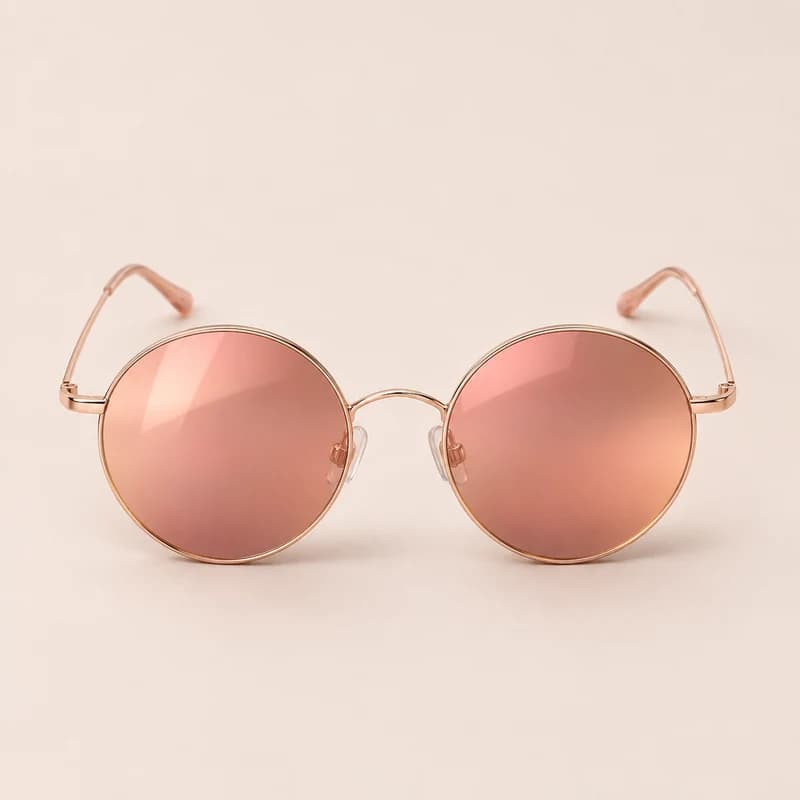
| Mirrored | Reflects extra light and adds a bold finish | Very bright conditions, and a statement look |
| Photochromic | Adjusts its tint to the light around you | Moving between indoors and bright sun |
Colour is about comfort and style, not protection. The AAO says coloured lenses, such as amber or grey, will not necessarily block out more sun than other lenses, and that mirror finishes may reduce the light entering your eyes but will not fully protect you from UV. It also notes that brown or rose-coloured lenses give extra contrast. Whatever colour you choose, check the UV label first.
Find your face shape
A reliable rule is contrast: angular frames soften round faces, and rounder frames soften angular ones. Oval faces suit most shapes.
| Your face shape | Frames to try | Why |
|---|---|---|
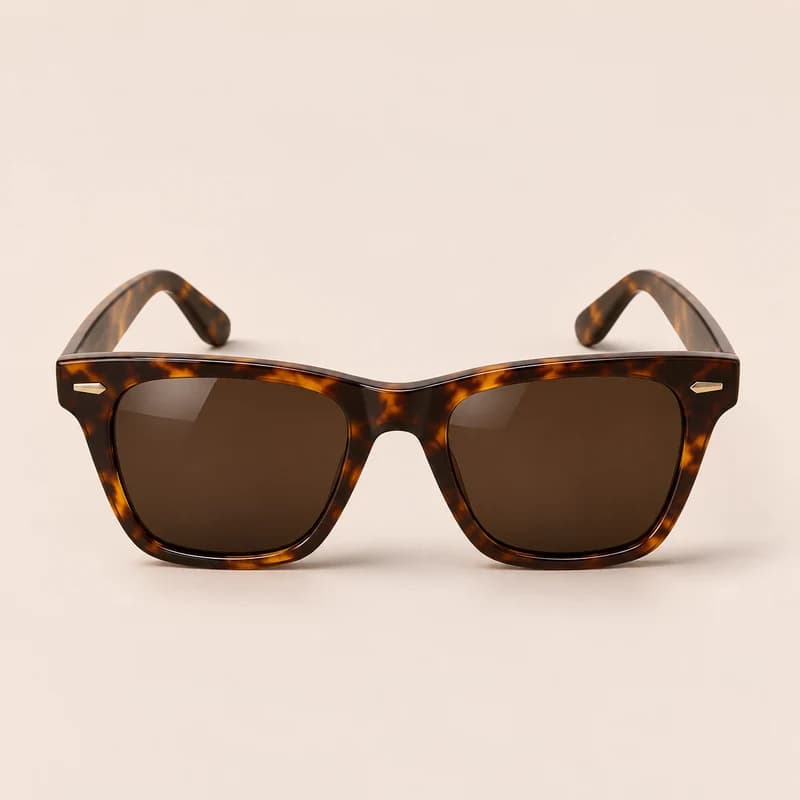
| Round | Wayfarer or square | Straight lines add structure |
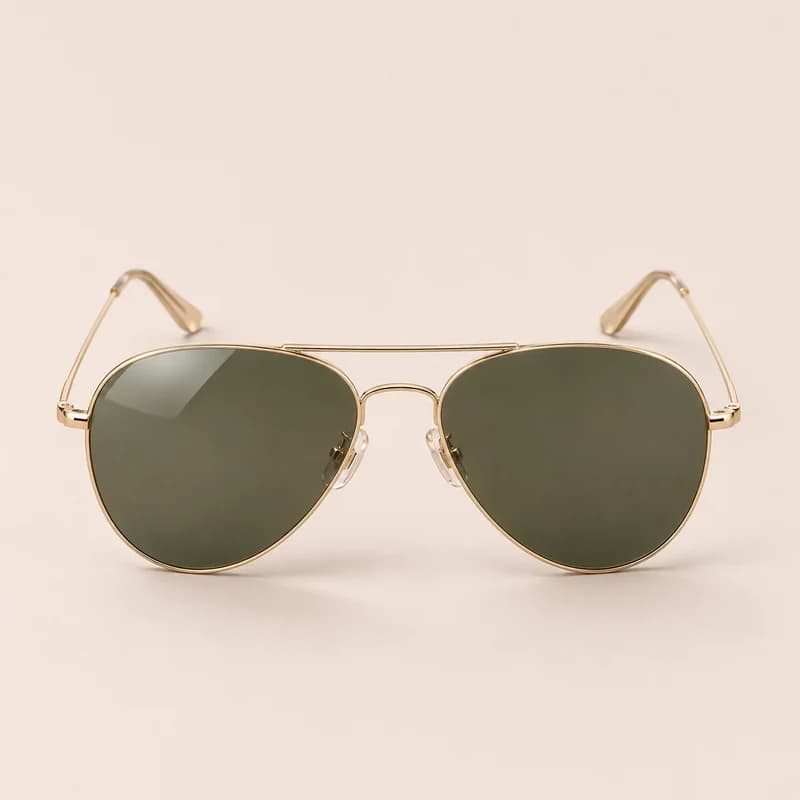
| Square | Round or aviator | Curves soften strong angles |
| Heart-shaped | Cat-eye or oversized | Balanced, softly curved lines |
| Oval | Most shapes | Choose the one you love |
These are starting points, not rules. If a shape makes you feel confident, wear it.
Check the fit and coverage
Good sunglasses sit comfortably on your nose and do not slide when you move your head. The arms should rest gently behind your ears without pinching.
Coverage matters for protection too. The AAO says large lenses offer a bigger shield from the sun, and that wraparound styles give even more protection by stopping UV rays entering from the sides. Try a pair on, move your head and look down, and check for gaps above, below and beside the frame.
Choose by how you live
| Your day | What to look for |
|---|---|
| Driving | UV400, and consider polarized lenses. Check your dashboard display while parked |
| Beach and water | UV400, good coverage and polarization if reflected glare bothers you |
| Sport | A secure fit. The AAO says polycarbonate lenses can withstand stronger impacts than regular plastic, and recommends a scratch-resistant coating |
| Everyday in the city | UV400 and a frame that stays comfortable all day |
| Children | Reliable UV protection and a flexible frame that stays put. See our kids' sunglasses |
| You wear a prescription | Ask about prescription sunglasses so you get UV protection and clear vision in one pair |
Look after them
Rinse with lukewarm water, clean with a microfibre cloth and keep your sunglasses in their case. Avoid leaving them in a hot car, where heat can damage coatings and frames.
The AAO says it is not clear whether UV protection fades over time. If you are unsure about an old pair, you can take it to an optical shop to have its UV protection tested.
Common questions about choosing sunglasses
How do I know if sunglasses are UV400?
Check the label or tag for "100% UV protection" or "UV absorption up to 400nm". If the information is missing from the product details, ask before you buy.
Do darker lenses protect my eyes more?
No. The AAO says darker lenses are not always better, and only sunglasses with 100% UV protection give you the safety you need.
Are polarized lenses better?
They do a different job. Polarized lenses reduce glare, but polarization itself does not provide UV protection, so check for UV protection as well.
Are expensive sunglasses safer?
Not necessarily. The AAO says sunglasses do not have to be expensive to be safe, and a pair labelled 100% UV-blocking is a better choice than a costly pair with no protection.
Do I need sunglasses on cloudy days or in winter?
The AAO says sunglasses are essential in all seasons of the year, because they protect your eyes from UV rays.
Can I use sunglasses to look at an eclipse?
No. The AAO says normal sunglasses do not protect you if you stare directly at the sun, including during a solar eclipse. Looking at the sun without the right eye protection can cause serious damage.
Which shape suits my face?
Contrast is a good starting rule. Angular frames soften round faces, and rounder frames soften angular ones. Use the face shape table above, then choose the pair you feel best in.