
The short answer
When you buy sunglasses for driving, beach days or everyday wear in the UAE, check UV protection first. Then decide whether you want polarization to reduce reflected glare.
You can have both in the same pair. UV400 describes ultraviolet protection; polarized describes a glare-reducing feature. The American Academy of Ophthalmology treats them as separate features, so check each specification before choosing a pair.
Polarized vs UV400: the difference at a glance
| What you are comparing | UV400 | Polarized |
|---|---|---|
| Main purpose | Filters ultraviolet radiation through wavelengths up to 400 nanometres | Reduces certain reflected glare |
| The problem it addresses | UV exposure | Bright reflections that make viewing uncomfortable |
| Does it confirm the other feature? | No. A UV400 lens may be non-polarized | No. Polarization alone does not verify UV protection |
| Does it tell you how dark the lens is? | No | No |
| What to check before buying | The UV protection specification for the actual pair | A separate polarization specification, plus UV protection |
A pair described as polarized with UV400 protection combines the two features. A pair described only as polarized still needs its UV specification checked.
What does UV400 mean on sunglasses?
The number refers to wavelength, measured in nanometres. UV400 describes protection extending through ultraviolet wavelengths up to 400 nanometres, covering UVA and UVB. The World Health Organization explains this UV400 specification and recommends asking an optician about filtering performance.
Start with a clear UV400 or 100% UVA and UVB protection specification. If that information is missing from the product details, ask before ordering.
Dark lenses are not proof of UV protection. A lighter tint can provide the same UV protection as a darker lens when both have the appropriate filtering performance. Price alone is not proof either. These points are set out in the FDA's guidance on choosing sunglasses.
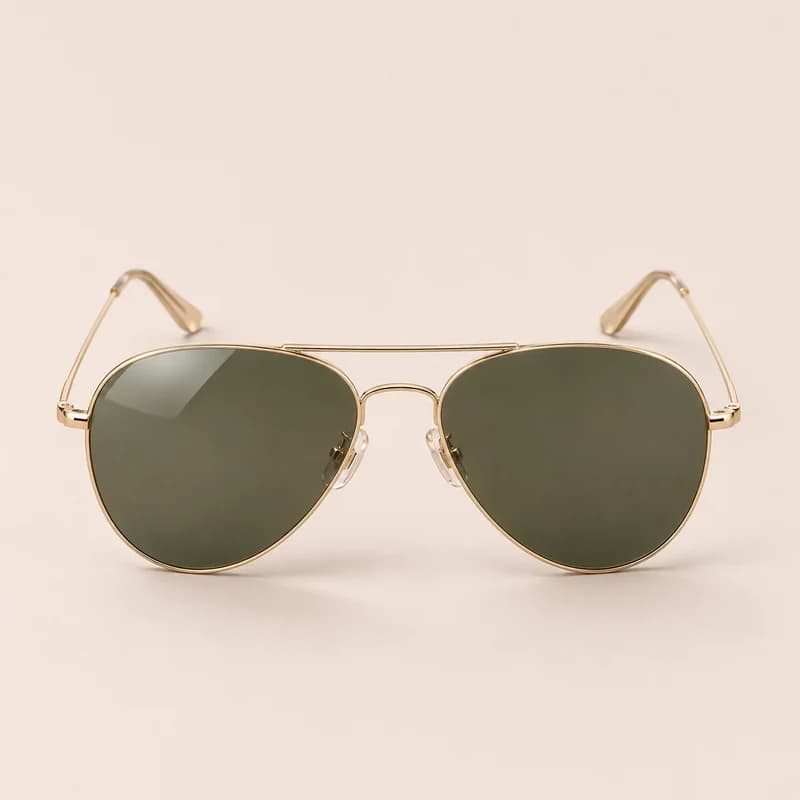
When browsing sunglasses with UV400 protection, check the details of the pair you want rather than relying on its colour, brand name or photograph.
When are polarized sunglasses worth considering?
Polarization becomes useful when reflected glare is the problem. Think of the bright reflection across the water, or sunlight bouncing off a smooth surface into your line of sight.
A polarized filter reduces some of this reflected light. That can make the view more comfortable, especially around water. It does not remove every reflection or make a lens suitable for every activity. The American Academy of Ophthalmology's guide to polarized lenses covers both their benefits and limitations.
If you are comparing polarized sunglasses, keep the UV requirement on your checklist. Polarization is an additional feature to evaluate after confirming protection.
Try the lenses in the conditions that matter to you where possible. A quick look in an indoor mirror tells you about appearance; it gives you little information about how the pair will feel beside the water or how it works with your car's displays.
Which features suit your day in the UAE?
Use your routine to narrow the choice before comparing frame styles.
| Your main use | A sensible starting point | What to check in person |
|---|---|---|
| Daytime driving | Confirmed UV protection, with polarization worth considering for reflected glare | Dashboard readability, visibility through the lenses and suitability for driving |
| Beach days and time beside the water | Confirmed UV protection, good coverage and polarization if reflected glare bothers you | A secure fit and gaps around the sides |
| Walking outdoors and everyday errands | Confirmed UV protection and a comfortable frame | Whether the pair stays in place as you move |
| Frequent use of digital displays | Confirmed UV protection, with polarization chosen only after checking compatibility | Your own phone and any displays you rely on |
A pair that feels comfortable by the water may make a particular dashboard harder to read. Test the trade-off that affects your own day.
Choosing sunglasses for driving: check more than glare
For driving, being able to read the road and instruments matters more than choosing the darkest lens available.
Polarized lenses can make some LCD screens harder to read. Before buying, check the pair with your phone and dashboard while the car is safely parked. Look straight ahead and through your normal viewing angles. If a display becomes difficult to see, try another lens option.
Check driving suitability separately from polarization. In its clinical guidance, the UK's College of Optometrists excludes very dark category 4 filters from driving suitability. Categories alone are not the whole assessment; appropriate signal recognition also matters.
Ask whether the specific lens is suitable for road use. Do not assume a darker tint is a better driving choice, and do not buy tinted sunglasses as a solution for night-driving glare.
If you need vision correction, discuss your prescription requirements before comparing frames. Ask which lens and frame combinations are appropriate for you.
Five checks before you buy
1. Read the specification for the exact pair
Look for a clear UV protection statement. If polarization is important to you, make sure it is listed separately. Similar-looking frames can be sold with different lens options, so check the selected version.
2. Check coverage as well as lens size
Large lenses do not automatically mean a close fit. Look at the gaps above, below and beside the frame. The National Eye Institute recommends well-fitting sunglasses that limit light entering around the lenses.
3. Keep the pair on for more than a moment
Move your head, look down and check how the bridge and arms feel. If the pair repeatedly slides or pinches, try another frame or ask about a fit adjustment.
4. Compare specifications before prices
If one pair costs more, identify what you are paying for. Compare the frame, lens options, fit and finish alongside the stated protection. A higher price should not replace a clear explanation of the product.
5. Choose the style you will actually wear
Once you have checked the lens features and fit, compare shapes and colours. Our guide to choosing sunglasses for your face shape and lifestyle takes you through that part of the decision.
Common questions about polarized and UV400 sunglasses
Are all polarized sunglasses UV400?
No. Polarization is not confirmation of UV400 protection. Look for both specifications if you want both features.
Is UV400 enough, or do I need polarization too?
UV400 addresses UV protection. Polarization is worth considering when reflected glare bothers you. You should still assess fit, coverage and suitability for the activity.
Can light-coloured lenses have UV400 protection?
Yes. Tint darkness does not establish UV filtering performance. Check the stated specification rather than judging protection by how dark the lenses look.
Do I still need sunglasses if my contact lenses block UV?
Yes. UV-blocking contact lenses do not cover every exposed part of the eye or the surrounding skin. The National Eye Institute recommends UV-blocking sunglasses over contact lenses. If you wear contact lenses, include sunglasses in your outdoor routine too.
Does a phone-screen test prove that sunglasses are UV400?
No. A change in screen appearance does not verify UV filtering performance. For UV protection, check the product information and ask an eye care professional about testing if the specification is uncertain.
Choose your lenses before you choose your look
Start with confirmed UV protection. Consider polarization for the reflected glare you encounter, check any displays you use, and make sure the frame feels comfortable.
Explore the Nimah Opticals sunglasses collection, or ask our team about lens options before choosing your next pair. Tell us whether you mainly need them for driving, time by the water or everyday wear so the conversation starts with your actual needs.